
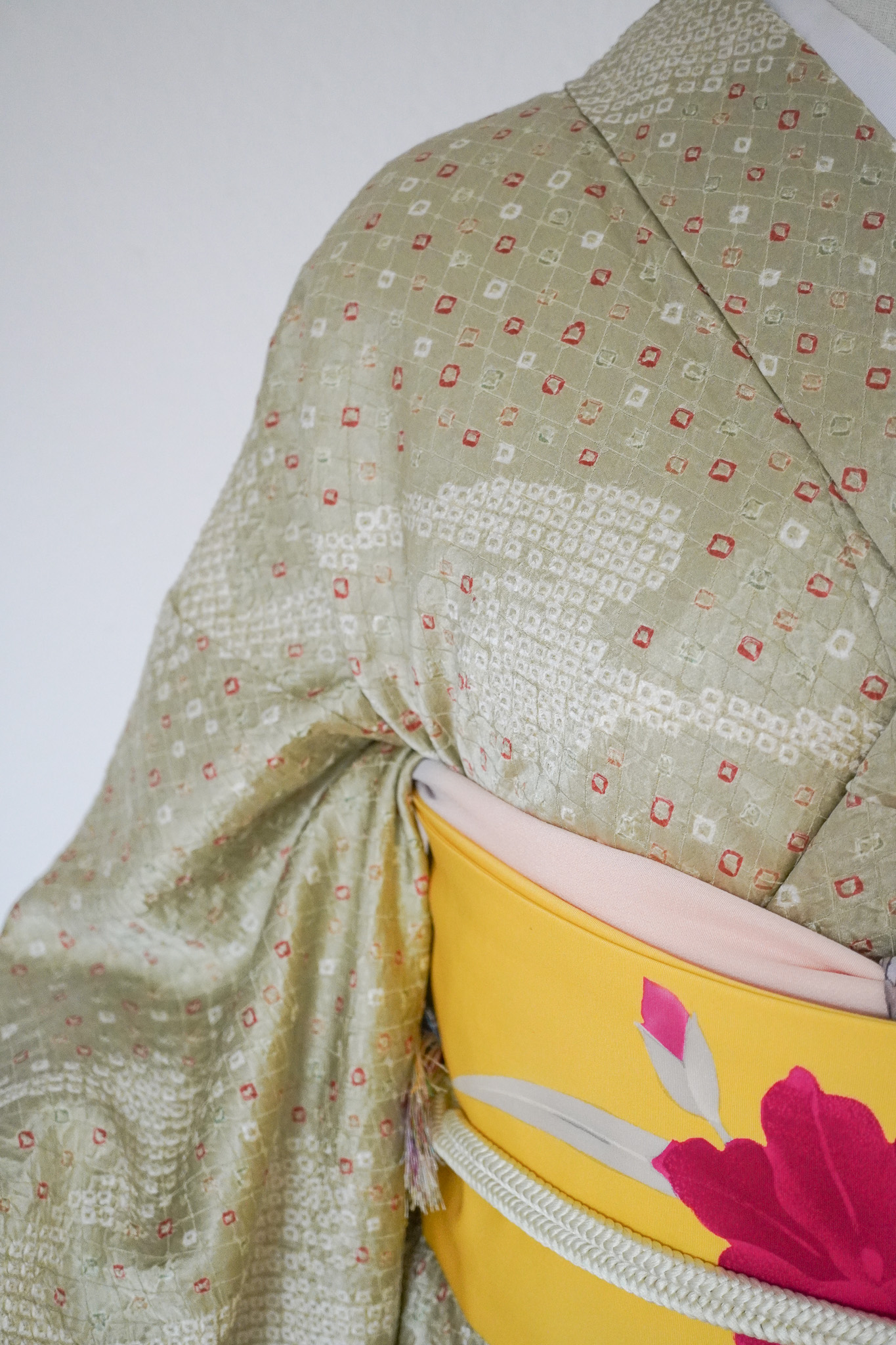
Some kimono spend most of their lives tucked away.
They sit in a tansu, tucked away inside a tatoushi. Carefully folded after the last time they were worn, they may stay there for months or even years. Not because they are forgotten, but often because they are treasured. Such garments are kept because they are cared for, and because of that, the right opportunity to wear them is often awaited.
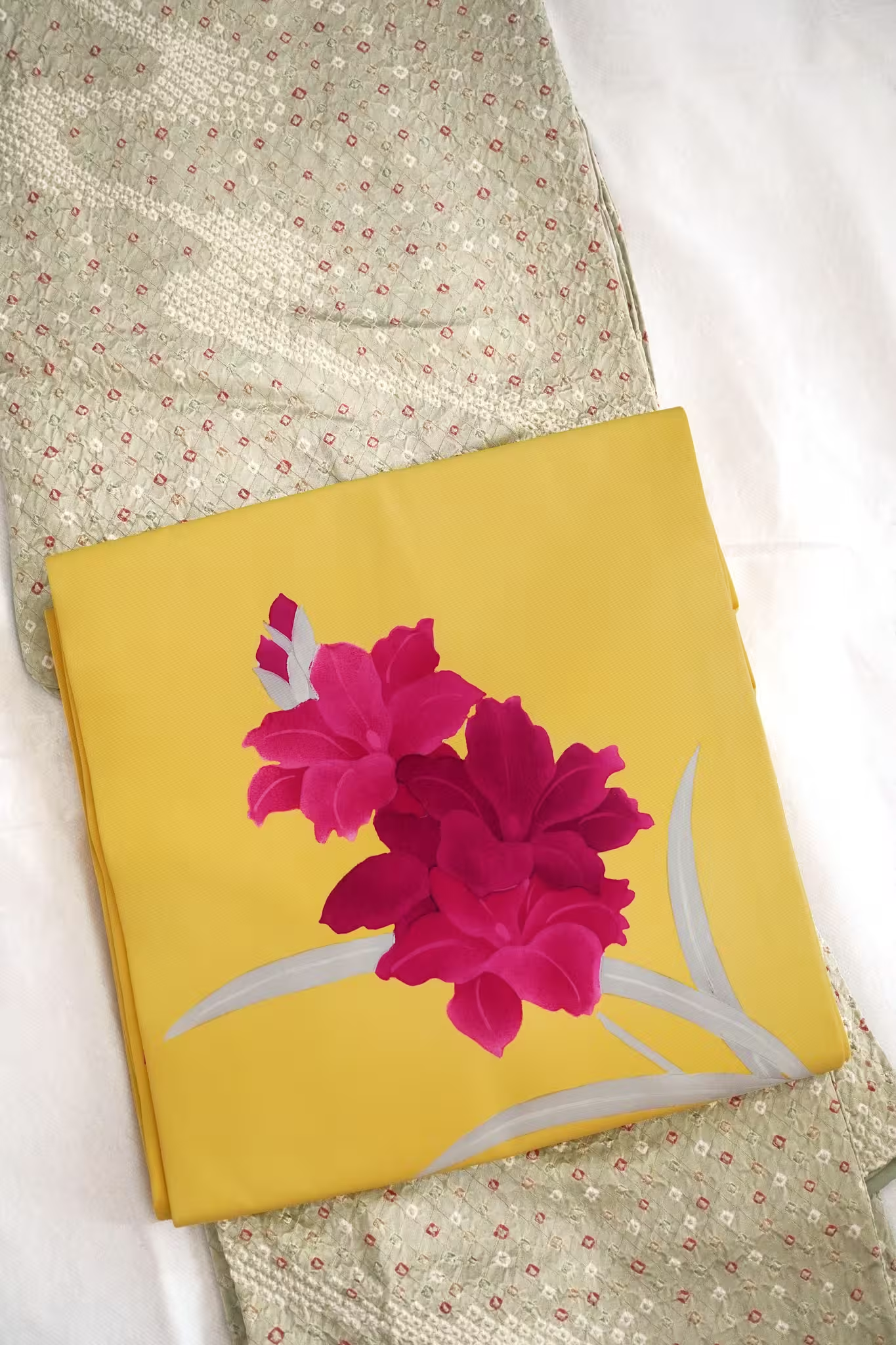
A tea gathering, a festival, a wedding, New Year, a special dinner. A day when the weather is pleasant, when there is enough time to dress properly, and when confidence in kitsuke feels sufficient. It is easy to think that kimono should be saved for special occasions.
And sometimes, that is true.
Kimono has always carried formality, season, age, status, taste, and social expectations in ways that are much more layered than ordinary clothing. A furisode is not simply a beautiful garment with long sleeves, and a houmongi is not only a patterned kimono. Even a casual komon or tsumugi has its own character, atmosphere, and context.
That is one of the reasons I love kimono. It is not just decoration; it carries meaning.
But living outside Japan often places kimono somewhere between respect for tradition and the realities of everyday life.
I study kitsuke and tea ceremony, and I collect kimono and obi. Many of them are secondhand, sometimes imperfect, with small stains or loose threads that make me wonder about the person who wore them before me. Kimono has rules, and those rules deserve careful treatment.
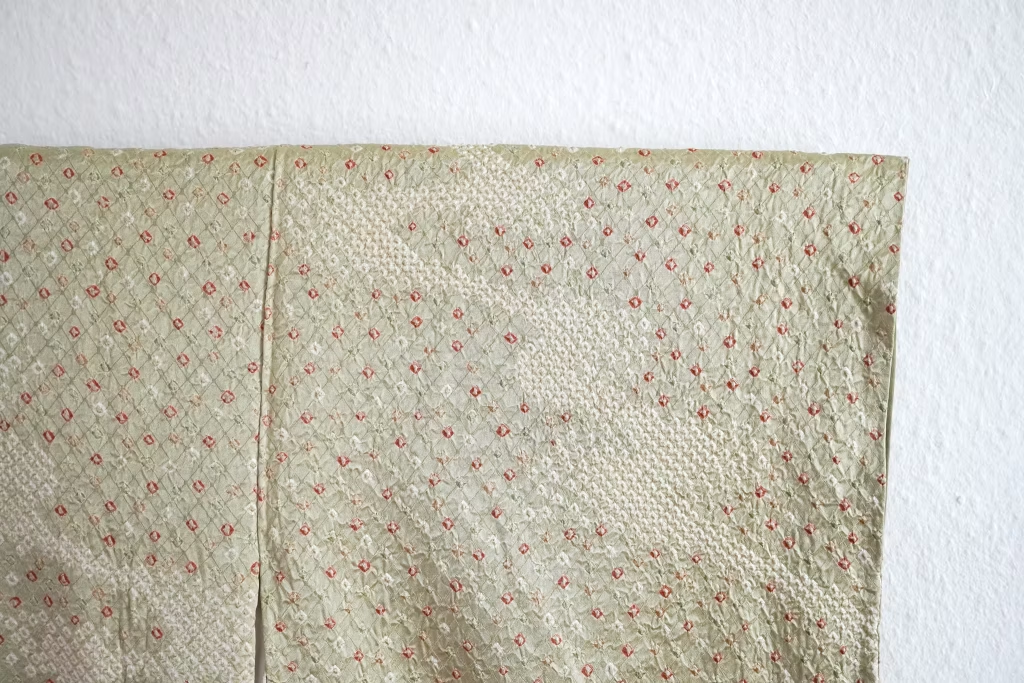
At the same time, everyday life is not built around kimono.
I live in Germany. Trains are taken, groceries are bought, backpacks and shopping bags are carried, and weather forecasts are checked before leaving the house. Considerations include whether it might rain, whether there will be a lot of walking, and whether enough energy will remain to put everything away properly afterward.
So the question becomes very simple: where does kimono fit into a life like this?
For me, wearing kimono used to feel like something that needed a clear reason. I felt it had to be connected to a special event or occasion to justify the time and effort involved. Without that, I often hesitated, wondering whether I was making too much of an ordinary day.
Over time, however, my perspective began to change.
Maybe kimono does not always need a major occasion. Maybe wearing it can be reason enough.
Not every coordination has to be perfect, and not every outing has to be memorable. Sometimes it is enough to try a kimono at home, practice an obi musubi, or see how a different obijime changes the overall look.
There are days when dressing happens simply for learning. I am just paying attention—to where the collar sits, whether the ohashori feels too bulky, or how a different obi changes the feeling of the same kimono. Sometimes I take photos, not because the coordination is finished, but because I want to remember what worked and what did not.
That is also part of wearing kimono.
It is not the same as attending a formal tea gathering or dressing for a ceremony, but it is still time spent learning, practicing, and becoming more familiar with the garment.
And perhaps this is especially important for those outside Japan.
In Japan, there are still occasions where kimono naturally appears, even if everyday kimono is no longer common. Outside Japan, those opportunities are often fewer. If only the perfect occasion is awaited, a kimono may spend most of its life folded away.
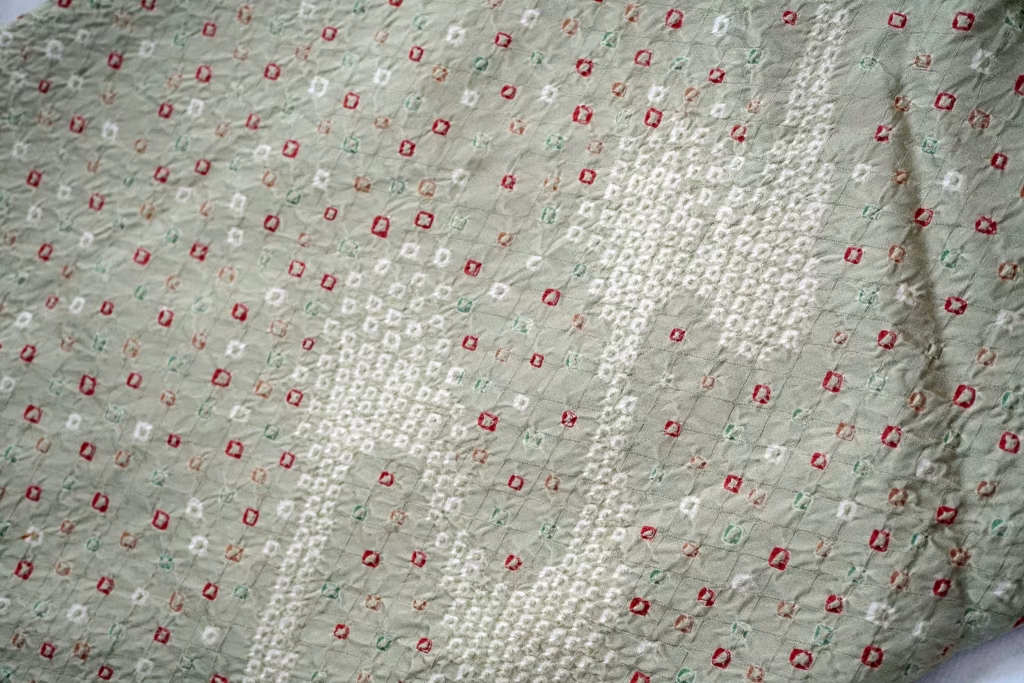
So personal opportunities begin to take shape.
Maybe that opportunity is nothing more than a tea practice at home or a short walk after getting dressed. Sometimes it is a workshop, a cultural event, or dinner with friends who share the same interest. Sometimes there is no event at all; the weather is pleasant, the season feels right, and the day simply feels suitable for wearing kimono.
There is also a practical side to this. Kimono becomes less intimidating when it is handled regularly. Folding becomes easier, dressing becomes more familiar, and things that once felt complicated gradually become routine.
I do not think everyday kimono means ignoring the traditions, customs, and etiquette that have developed around kimono over generations.
For me, it means finding a way for tradition to exist within real life. It means respecting established practices while also recognizing that kimono was originally clothing people lived in, not something created only for display.
A kimono that is carefully stored has value, but a kimono that is worn and appreciated has value too.
That does not mean every kimono should be worn casually. Some pieces are meant for formal occasions, and some deserve a level of care and attention that everyday life cannot always provide. There is also something special about saving certain garments for important moments.
But not every meaningful moment has to be a grand one.
Smaller occasions have become increasingly meaningful: a quiet afternoon with enough time to dress without rushing, an evening spent practicing before an event that is still weeks away, or even the simple decision to wear a yukata outside for the first time. These moments feel significant not because anyone else notices, but because they change the relationship between the garment and the person wearing it.
Sometimes it is a woman in Germany who brings her own yukata and wants to be dressed for Japan-Tag. She leaves smiling, excited to wear something she has been looking forward to, and moments like that stay with me.
These moments may seem small, but they matter. They are often how cultural traditions continue in everyday life—not through formal ceremonies alone, but through personal experiences and repeated practice.
I often think about the space between heritage and everyday life. It is not always an easy space, and it comes with questions: Am I doing this correctly? How much can be adapted? What should remain unchanged, and what can evolve?
I do not have perfect answers.
But I know that I do not want kimono to become something admired only from a distance. I want to keep learning about its formality, seasonal customs, craftsmanship, and history. At the same time, I want it to remain part of my life—not every day, perhaps, but more than once or twice a year.
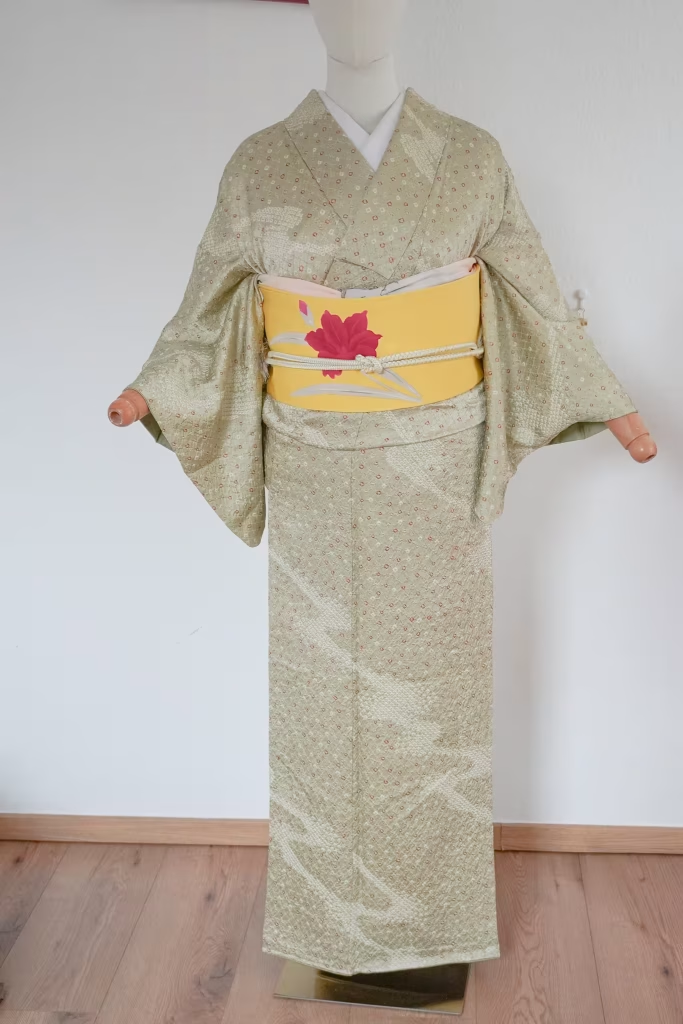
To me, kimono is more than something worn on special occasions.
It encourages attention: to fabrics and textures, to seasonal colors, to how different pieces work together, and to details that are easy to overlook when getting dressed becomes automatic.
When kimono is worn, movement changes and posture changes. Awareness of the garment increases, and even ordinary activities feel slightly different because they require a little more care.
Perhaps that is one reason I keep returning to it.
Kimono does not need to become everyday clothing to have a place in everyday life. Sometimes it is enough simply to wear it, even without a special event waiting at the end of the day.
Perhaps that is already enough of an occasion.


Leave a Reply